The two guest lectures I found most interesting were Sherry Mariea’s talk on women’s rights and Scott Christiansen’s talk on exponential technologies. I found Mariea’s talk interesting because she pointed out things like gendercide, which I was peripherally aware of, but did not know was as prevalent today. I think what struck me the most though was her recipe for fixing gender stereotypes and gender inequality, about working together without blaming the other gender wholesale to fix societal problems that are rooted in our culture’s perception of gender.

I found Christiansen’s talk interesting because it was relevant to my field of study and on a topic that many people don’t seem to think much about: the crazy pace of technological advancement in recent years. In 100 or so years we’ve gone from simple telegraphs that needed trained operators and a direct connection to most of the world carrying a powerful computer in their pocket. I also thought the hype cycle surrounding new technologies he showed us was really interesting. That was something I’d never really thought of before, but made a lot of sense. His example of 3d printing was a good one. I remember a few years ago being so excited to be able to print just about anything, and then realizing that these were no Star Trek replicators and that spreading layers of thin lines of melted metal/plastic was a lot less useful than I pictured it being. Christiansen’s point about startups being generally overhyped and underwhelming also made a lot of sense to me since, as he said, most fail miserably. People tend to glorify startups as the real hubs of innovation, but major companies are still the ones driving the growth of technology.

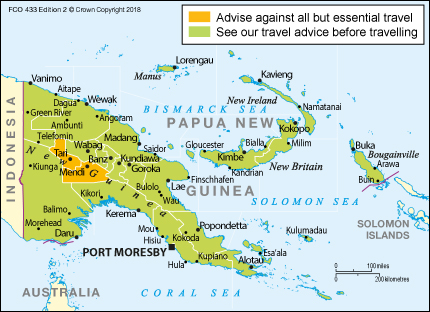
I definitely learned a lot in researching Papua New Guinea and, to a much lesser extent (in terms of research,) the Solomon Islands. I’d never really thought about either nation much at all, especially since as a news junkie they don’t seem to pop up much at all, if ever. Before this class they seemed like kind of irrelevant countries to me. I think what stood out to me the most was that PNG is the most linguistically rich country on the planet and that doing research on countries so underdeveloped that the vast majority of people don’t have access to a telephone in their village, much less access to the internet, can be really difficult. It’s hard to find good sources of information on countries where one or two news sources in the entire country even have an online presence, especially since that online presence is a poorly-designed WordPress site full of poorly-written articles that are short and lacking in relevant information. I think the best journalism in/about these nations is probably broadcast through local radio stations which just don’t have the resources to maintain a website in addition to broadcasting, especially since, again, most people in PNG and the Solomon Islands don’t even have access to the internet.
PNG’s linguistic diversity, though, and the efforts of scholars around the world to preserve it is something that is well documented. I never really considered the importance of linguistic diversity, and was always convinced that the world heading towards one universal language was, on the whole, a good thing. After our class discussion about the power of language and how closely language and culture are tied though, I changed my opinion. Language is a critical part of culture and something cultures need to preserve if they want their cultural ethos to stick around for future generations.





 Globalization and Technologies in Oceania