Post #8

The two guest lectures I found most interesting were Sherry Mariea’s talk on women’s rights and Scott Christiansen’s talk on exponential technologies. I found Mariea’s talk interesting because she pointed out things like gendercide, which I was peripherally aware of, but did not know was as prevalent today. I think what struck me the most though was her recipe for fixing gender stereotypes and gender inequality, about working together without blaming the other gender wholesale to fix societal problems that are rooted in our culture’s perception of gender.

Image result for Gartner's Hype Cycle
Source: Gartner

I found Christiansen’s talk interesting because it was relevant to my field of study and on a topic that many people don’t seem to think much about: the crazy pace of technological advancement in recent years. In 100 or so years we’ve gone from simple telegraphs that needed trained operators and a direct connection to most of the world carrying a powerful computer in their pocket. I also thought the hype cycle surrounding new technologies he showed us was really interesting. That was something I’d never really thought of before, but made a lot of sense. His example of 3d printing was a good one. I remember a few years ago being so excited to be able to print just about anything, and then realizing that these were no Star Trek replicators and that spreading layers of thin lines of melted metal/plastic was a lot less useful than I pictured it being. Christiansen’s point about startups being generally overhyped and underwhelming also made a lot of sense to me since, as he said, most fail miserably. People tend to glorify startups as the real hubs of innovation, but major companies are still the ones driving the growth of technology.

Image result for papua new guinea
Source: Wikivoyage

I definitely learned a lot in researching Papua New Guinea and, to a much lesser extent (in terms of research,) the Solomon Islands. I’d never really thought about either nation much at all, especially since as a news junkie they don’t seem to pop up much at all, if ever. Before this class they seemed like kind of irrelevant countries to me. I think what stood out to me the most was that PNG is the most linguistically rich country on the planet and that doing research on countries so underdeveloped that the vast majority of people don’t have access to a telephone in their village, much less access to the internet, can be really difficult. It’s hard to find good sources of information on countries where one or two news sources in the entire country even have an online presence, especially since that online presence is a poorly-designed WordPress site full of poorly-written articles that are short and lacking in relevant information. I think the best journalism in/about these nations is probably broadcast through local radio stations which just don’t have the resources to maintain a website in addition to broadcasting, especially since, again, most people in PNG and the Solomon Islands don’t even have access to the internet.

PNG’s linguistic diversity, though, and the efforts of scholars around the world to preserve it is something that is well documented. I never really considered the importance of linguistic diversity, and was always convinced that the world heading towards one universal language was, on the whole, a good thing. After our class discussion about the power of language and how closely language and culture are tied though, I changed my opinion. Language is a critical part of culture and something cultures need to preserve if they want their cultural ethos to stick around for future generations.

Post #6

Kibumba refugee camp near Goma (Source: Jean-Claude Coutausse)

The principal concerns raised by Linda Polman in her book Crisis Caravan are that aid organizations help warring parties in conflict zones, that they spend too much time and resources marketing themselves, and that they do not deliver aid in an effective way. The story she chose to lead this book with, about the horrific conditions perpetuated by aid organizations in the refugee camps around Goma in what was then Zaire (now the Democratic Republic of the Congo) following the Rwandan genocide is a perfect example. She highlighted the fact that these UN-run camps were actually the home of the genocidal government-in-exile of Rwanda, running from those who would’ve held them accountable had they stayed in their home country. The aid organizations active in these camps clothed, fed, and cared for these government officials and their solders, allowing them to lead raids to continue their genocide back in to Rwanda and strengthen themselves for an attempt to take back their country and reinstitute their genocidal policies. Additionally, with hard currency flowing from these aid organizations directly in to the pockets of these officials, they could afford to fly weapons directly in to the camps, further bolstering the threat they posed. Polman argued that based on what we know now about those camps, aid organizations had no business being there and actually contributed to the rampant instability that effects this region through the present day, including in fueling several wars in the DRC.

Polman says “Aid organizations are businesses dressed up like Mother Teresa” because they are. She outlines how aid organizations rely on donor contracts for their continued existence, and this leads to massive competition between them. Organizations who’s public image is that of care and healing are really running huge ad campaigns so they can continue receiving enough donations to stay solvent. As the horrific story described above appropriately points out, these organizations don’t really care who they’re helping or how much of their aid gets syphoned off by warlords, brutal governments, and terrorists as long as the money keeps rolling in.

Polman spent a lot of time laying out the myriad problems with humanitarian aid organizations, but she admitted herself in her afterword that there is no easy or obvious solution. I agree completely; there is no obvious solution and I don’t think there ever will be. The solutions that have been proposed, including in our class discussion, are all contingent on enforcement. Just like with any law, creating a binding code of conduct for aid organizations would mean nothing if the organizations knew they could flaunt those laws with no consequences. No western country wants to send law enforcement to every disaster area. Polman made it evident in this book that journalists are no help either since, in a world where everybody wants high quality news but nobody wants to pay for it, journalists’ trips to disaster areas are usually covered in whole or in part by one of these large aid organizations. With no oversight whatsoever currently in place, and most large donors driven by headlines instead of a through accounting of an organizations goals and practices, I simply can’t see any way that these organizations will ever be regulated. Thinking from a political perspective, the prospects seem even more bleak. Politicians would only have to consider what their opponent would have to say about them during the next election cycle if they were the first in the nation to punish charitable organizations. It’s not a very pragmatic or popular point of view, but it’s one this world urgently needs to take.

Post #5

Even though, in my opinion, the video linked to this question didn’t really address said question, I think that human rights inevitably become intertwined with climate change. From the beginning, the things that put man in a position to even change the climate of an entire planet come from violations of the human rights of many. We would not have had a global trade system without the vicious exploitation and violations of the human rights of those in the global south by those in the global north. The workers who powered the industrial revolution had many of their fundamental human rights violated by those who governed their nations, all in the pursuit of profit. The exploitation of people was essential to their ability to most effectively exploit their environment, changing our climate at a disturbing rate. The workers in industrialized Britain, for example, had no choice but to work in the factories pumping toxic chemicals in to the atmosphere. More relevantly, today workers in the Chinese factories that make everything we in the west gratuitously consume have no choice but to work in these factories, violating their human rights. More directly, many Pacific Islanders have seen their island homes partially or completely reclaimed by the ocean due to rising sea levels caused by our reckless abuse of our planet. The industrialization of the west, which is clearly the driving force of climate change, definitely has the horrible side effect of violating the human rights of those we consider lesser, unimportant in the global order.

Endangered cultures are those cultures which are in danger of dying out; ones in which the youth does not learn the ways of the culture from which they come either because of some outside force like a paternalistic government seeking to assimilate them in to the accepted ways of the nation which has been drawn around them or because they themselves see no value in learning the old ways of their culture for reasons such as economic opportunity elsewhere in the big city. To some degree I agree with the sentiment of Davis’ TED talk (basically that there is great value in preserving native cultures and that their practices and views of the world strengthen us as human beings,) but in a another way I disagree: the future I see will inevitably bring us together as one people. Technology is progressing at an astronomical rate and leading researchers have predicted that we will achieve singularity by 2045. Singularity is the point where man will be able to merge with the artificial intelligence we’ve created (more basically our brains will be able to communicate directly with computers,) in my view fundamentally changing the way we view consciousness and humanity. This will inevitably lead to every person being hooked up to these machines, creating an internet of people. With all of us completely and instantly connected to one another, there will effectively be just one person, the amalgamation of all singular parts in to one inconceivable whole. Discussions of preserving cultures and languages will be irrelevant, we’ll just have one language: binary and conflict will be a thing of ancient history. It’s an exciting thought that makes a lot of our current thinking about the world completely irrelevant.

Eurocentrism is viewing the views and practices of other cultures through the lens of European values and beliefs. Noor believes that our way of looking at the world is not inherently right and that we must not judge other countries by our own standards. I believe, however, that this view is equal to the philosophical belief of cultural relativism which states that your morality is derived from the norms and practices of the culture to which you belong and that as a result you cannot judge the morality of others based on your own morals, as they are derived from the larger beliefs of your own culture. I believe that there should be a central set of moral beliefs by which we judge all peoples equally.

Post #4

Image result for papua new guinea sea levels
Source: Ecology Global Network

On this first point, I think it is making a very generous and, frankly, counterproductive assumption that people agree that we have a moral obligation to save the planet. A lot of people don’t care or don’t realize that they should, which is a huge part of the problem. There’s a lot of short-term, profit-driven thinking that is wholly incompatible with environmental protection, and that thinking is what drives the world as we know it. As I’ve talked about before, most proposed solutions to climate change, especially those on an individual level, are a bandaid on the gaping bullet wound that is the damage we’ve done to our climate. In many ways it’s too late to save the planet from some of the worst symptoms of climate change, but what can and should be done is a set of strict, global standards governing carbon emissions and a forced change to our way of life in the west in order to preserve our planet. That being said, I can say with full confidence that something like this will never happen, ever. Our system is so deeply entrenched that it would take the destruction of the west for anything to ever really change. World leaders may pay lip service to fixing our planet, but the agreements they’ve produced have amounted to nothing more than them scoring points with their political bases. While there might be a general consensus that something must be done, no nation is willing to take the costly, way-of-life-altering steps necessary to actually save our planet.

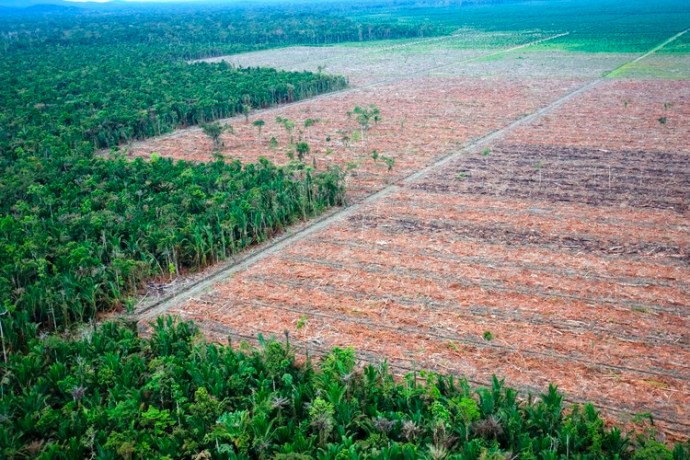
Both Papua New Guinea and the Solomon Islands have 350.org offices. Water.org does not seem to have much of a presence in this region. PNG does have a conservation.org presence focused on empowering community leaders to help address environmental concerns domestically. Since both of these countries are island chains, the threat from climate change is very real and very urgent. PNG is already experiencing the ill effects of rising sea levels and the unstable weather patterns that result from climate change. In the Solomon Islands, some islands have been completely submerged, while other have had villages permanently submerged because of rising sea levels. In the long term, rising seas threaten to swallow vast swaths of both countries entirely. PNG and the Solomon Islands are poster-children for the ill-effects of climate change, especially since they are small and do not have the international financial or political capitol to stop it. These countries both have had, and continue to have, corruption problems as well, further worsening their plight. Industries such as palm oil production devastate the pristine, extremely biodiverse ecosystems within these nations with no ramifications. This industry, of course, counts on the thirst in the west for cheap oil for food and cosmetics to continue to flourish, destroying rainforests the world over in the process. Countering the environmental devastation caused by palm oil producers wouldn’t be particularly challenging, but as with most of these situations people are unwilling to change the way they live to protect their environment.

Image result for papua new guinea palm oil destruction
Source: ALERT Conservation

Greenpeace is definitely active in PNG, and recently criticized a local palm-oil producer for destroying rainforests to grow oil palms. They leveled the same criticism at another company in the Solomon Islands as well. Solving the devastation caused by these producers would be very simple: western nations would only have to place an embargo on all palm oil produced through clear-cutting of rainforests, with simple, verifiable checks in place to ensure compliance. This, however, would be costly and would raise food prices, especially for consumers making it a no-go for our most, if not all, of the west.

Sources

Climate Frontlines (UN Org.)

Post #2

Languages of Papua New Guinea: Index Map
Source: Ethnologue

Papua New Guinea

Papua New Guinea is the most linguistically diverse country on earth, with more than 850 languages according to The Economist. While there are only 3 official languages: English, Tok Pisin (a creole language), and Hiri Motu (an Austronesian language); the many, many others contribute to the unique culture of PNG. The Economist credits the “wild topography” (the country has many jungles, mountains and swamps) of the country for this linguistic diversity along with the ~40,000 years the country has been inhabited, the vast majority of it spent without Western contact. The language mainly spoken today, Tok Pisin, is a mix of English, German, and native Papuan languages.

The challenge to a country like PNG, with so many small languages, is preventing them from fading away; not being passed down to the next generation. Of the 850 languages spoken in PNG, about 650 are from the “Papuan” language family, meaning they originated in PNG and do not have major connections to languages spoken elsewhere making them more difficult to study. Many of these small languages were spoken only in a single village or small area, and with the youth population reluctant to learn languages they see as irrelevant to their future as internet-connected, global citizens, it is very challenging for those proud of their linguistic history to preserve their (hyper-)local language. There is still hope though. Anthropologist Yoseph Wally believes that the country’s youth will want to learn their native language to participate in cultural events, ceremonies, and rituals since these must be conducted in the local tongue.

PNG is a member of the UN, IMF, and WTO. PNG became a UN member in 1975, an IMF member in the same year, and a WTO member in 1996. PNG has a Gini Coefficient of 41.8, with a global ranking of 54, between Samoa (worse), and Uruguay (better.) Granted, this measurement was last updated for PNG in 2009. This means that PNG is about 41.8% less equal than a perfectly equal society where an equal percentage of the population earns each % of total national income. At number 54 of 158 ranked nations on the World Bank ranking list, this makes PNG a comparatively unequal society, which I would attribute to the significant majority of the population who live in rural areas and earn fairly little in industries such as agriculture, timber, and mining.

PNG had a GDP (PPP) of $3,700 in 2017, ranked 184th of 229 countries according to the CIA World Factbook. This low number would make sense considering PNG’s developing country status, and will undoubtedly improve in the future thanks to the major investments I mentioned in my last blog post.


Languages of Solomon Islands
Source: Ethnologue

Solomon Islands

While English is the official language used by the government of the Solomon Islands, it is only spoken by 1-2% of the population. There are about 100 languages spoken in the Solomon Islands. The linga franca, however, is The Solomons pidgin, based on English, which is used by most for day-to-day interactions. As in PNG, many indigenous languages are fading as young people from the villages where they are spoken learn the pidgin they need to communicate with others,but not the local, traditional language, leading to the death or endangerment of many such languages.

The Solomon Islands is a member of the UN, IMF, and WTO. It became a UN member in 1978, an IMF member in the same year, and a WTO member in 1996. The Solomon Islands has a Gini Coefficient of 37.0, with a global ranking of 83, between Vanuatu (worse) and Kiribati (better.) This makes it more economically equal (relative to income distribution, anyway) than PNG. This, again, means that the income distribution by percent of people is 37% less equal than a society where an equal share of people make each percentage of total national income. While better than PNG, this number is still not great, and is probably low due to the same factors effecting PNG discussed above.

The Solomon Islands had a GDP (PPP) of $2,200 in 2017, ranked 203 of 229 countries according to the CIA World Factbook. As with PNG, the country’s low population and developing country status could help account for this number, especially considering the years the Solomon Islands spent under foreign peace-keeping occupation. As the country exists this mission and transitions to self-governance, I predict that this number will rise as the nation becomes a more attractive recipient for world bank loans and foreign development projects.

Sources

The Economist

Documenting Endangered Languages of the Pacific – University of Sydney, Australia

Languages of the Solomon Islands

Post #1

Image result for papua new guinea
Source: UK Government

Papua New Guinea

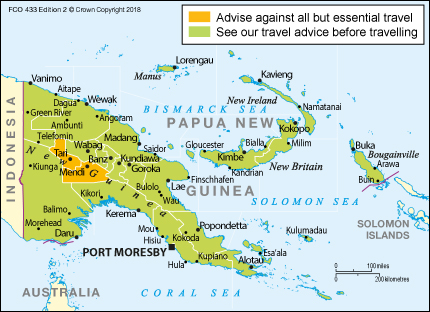
Papua New Guinea (hereafter shortened to PNG as it appears in multiple national newspapers) is an Oceanian state made up of a larger island shared with Indonesia and many other smaller islands, the largest being New Britain and New Ireland. PNG has a Westminster parliamentary government, and the current leader is Prime Minister Peter O’Neill of the People’s National Congress party. PNG is, however, a member of the Commonwealth nations and is still officially lead by the English Queen. In 2011-2012 PNG faced a constitutional crisis after the sitting prime minister was absent from the country for 5 months having undergone heart surgery in Singapore, prompting parliament to elect a new prime minister. After this election the Supreme Court of PNG ruled this vote unconstitutional and demanded that the man elected by parliament (current prime minister Peter O’Neill) step down.  The result of this crisis was a law passed by parliament stating that more than a 3-month absence from the country by a sitting prime minister will trigger a vote to replace them. PNG has been recently marred by crime, as evidenced by the recent imposition by the US and UK of a level 4 travel alert due to the recent armed robbery of 20 international tourists at one of PNG’s most popular resorts in addition to an escalation of tribal violence that has lead to a government-imposed state of emergency in some provinces.

PNG is considered a developing nation with a majority of its economic activity coming from the mining, petroleum, LNG, and agricultural industries. Thanks to a combination of world bank loans and loans from private entities, these industries have been expanding; especially in LNG production where a $19 billion project funded mainly be ExxonMobil was recently completed. Due to a global drop in commodity prices, however, profits from these industries have dropped recently leading to a considerable reduction of government spending. PNG is also experiencing a drought, hampering agricultural production.

Most of the population lives in remote rural areas and is highly tribal. As a result only about 18% have access to electricity. Recently a volcanic eruption has destroyed some villages on a remote island, prompting the military to mobilize to deliver supplies while many criticized the government for its slow response. Only about 55% of citizens have access to a telephone and only 9% have internet access.


Image result for solomon islands
Source: CIA

Solomon Islands

The Solomon Islands are an island chain directly east of PNG. The Solomon Islands are also a Commonwealth nation with a Westminster parliamentary system lead by Prime Minister Rick Hou of the Democratic Alliance Party. From 2003 until last year a multinational stabilization force lead by Australia helped run the country after serious ethnic violence and rampant corruption brought the government to the brink of collapse. Today, the Solomon Islands are on a road to recovery as seen in the precipitous drop in their Fragile State Index ranking. While corruption is still a problem, recent efforts by the state police force to crack down seem to be seeing some success. Parliament is currently in the process of passing a constitutional amendment for election reform designed to cut down on fraud with more oversight and make voting easier through remote voting and additional considerations for disabled people.

The Solomon Islands is currently listed by the UN as one of the least-developed countries. This is changing though, as the UN recently announced that it would remove the Solomon Islands from its least developed countries list. The Solomon Islands’ economy is based mainly on Agriculture. The country is rich in mineable resources, but most have not been exploited because of the long period of government and economic instability.


Sources

The Fund for Peace

Papua New Guinea Post Courier

The Solomon Times

The Solomon Star

Solomon Islands Broadcasting Corporation

CIA World Factbook