Post #6 The Puzzle of International Aid

Overview

Today’s post focuses on International Aid. Now, most hear the word aid and spark up, get excited, get compassionate, but we’ve learned that maybe it’s not exactly what all it’s cut out to be. The post will discuss the current pros and cons to aid. What needs to change for aid to be effective, and the different things we can do to truly make a difference.

What are the principle concerns Linda Polman raises in her book?

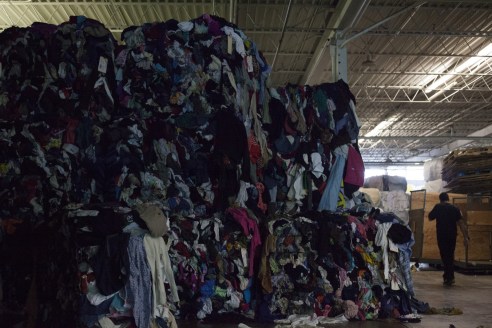
In Linda Polmans book The Crisis Caravan we are shown a whole new side of what is going on with international aid. Polman shows us the darker side of aid and the concerns that this has developed. For starters Polman fears that aid will continue to trend towards becoming more harmful than it is good to those that it’s “helping”. Yes, most think of aid as a saving grace to those in need, but Polman shows us that this isn’t exactly the case. She shows us that due to corruption seen in larger aid organizations many new aid groups called MONGOs (My own NGO) have appeared. These may have the intention to help, but they really tend to be self-serving groups that end up hurting the people they are trying to help more than helping them. Polman shows us that they leave “well-intended but unwanted gifts that clog up airfields and logistical hubs” which actually end up being “among the most significant problems faced by anyone providing emergency relief In a crisis”. These groups tend to have a poor idea of the impact their work leaves because “they perform no studies” and in some cases can even disrespect other cultures by pushing their beliefs on them. An example of this would be when “in Afghanistan they distributed Bibles along with meals, until the Islamic Afghan government put a stop to it”. Another concern Linda presents is that some groups will continue to use aid as a weapon of war. This was an issue in Liberia when the countries president “demanded 15 percent of the value of aid to be paid to him in cash”. In other instances, groups have snuck into aid hospitals and replaced the current patients with their wounded. Polman fears that these issues could continue to worsen and honestly until we see steps towards a solution then we should too.
recycled-clothing-fast-fashion-may-creating-waste-crisis.jpg

Why does she say “Aid organizations are businesses dressed up like Mother Teresa” (p. 177)?

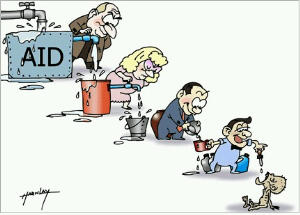
Polman states that “Aid organizations are businesses dressed up like Mother Teresa” why would she say this? What would drive somebody tear down these “great” organizations? What would push them into making this statement? Well its obvious many aid organizations, big and small, arrive acting like they are there for the peoples best interest. That the organization is present to help those in need, but that’s not the case. As stated above a lot of these organizations “tend to be self-serving”. And when you think about it, it becomes blatantly clear/obvious. With big organizations Polman tell us that she’s “known aid workers who cared for child soldiers and war orphans by day and relaxed by night in the arms of child prostitutes” which is no surprise since “wherever aid workers go, prostitution soars”. These are the same people that fly business or first class to the countries in need and often rent Land Rovers when there. This sparked an uptick in MONGOs who believed they would truly/actually help, but many leave countries in a worse condition. Polman tells us of a doctor who believed he had no purpose in life so started to help those wounded during an African war, but when he left after a week many would appear at a hospital or dead because “aftercare turned out not to be part of the package” anyhow even though these people died the doctor felt better. Sadly, churches are just as guilty. They are notorious for showing up with food but are also handing out bibles and holding conventions at the same time. Conventions that people must pay to attend. How do we stop this? What should be done?
foreign-aid

What do journalists, the public, governments have to do to make humanitarian aid successful?

This will not be an easy fix and it will take a lot of time. I’m no expert so below is simply my opinion. I understand that its likely easier said than done but remember this is just an idea.


Journalist– Journalist need to report on faulty aid. They need to work with large aid groups and discourage excessive support to the countries in need. They should report on the excess, so people understand that they might be hurting people more than they are helping. Journalist most of all should help educate people on effective and harmful aid.


The Public- The public needs to do more research on effective aid organizations. It needs to stop being greedy and should understand WHY they are helping and decide on whether or not it is selfish. The public needs to discourage the growth of MONGOs. And the public should only be sending supplies that would help somebody, G-strings and stilettos don’t help anybody at all.


The Government- The government should be encouraging journalist to report on poor aid. The government should educate the people on good and bad aid. The government should regulate BOTH MONGOs and NGOs by making sure they are actually effective. The government should also apply similar laws to aid workers when they are across seas to protect people in other countries. The government should help MONGOs and NGOs communicate.


This is an issue that can be fixed its just going to take a lot of cooperation and a lot of time.
Environmental Issues, Endangered Cultures, and Euro-centrism

Overview

Today’s post covers a few issues that seem to be present in the world. These issues have affected millions, but all in different ways. What’s sad is that they are only a small number of many so what are they? What can we do to fix them? Will they ever go away?


Question #1: What does climate change have to do with human rights? See Elizabeth Lindsey https://www.youtube.com/watch?v=NrmZUqcVdow

This video didn’t support the question, and if it did then I must have missed the answer. I believe that climate change should be considered a moral issue. This is because it has a clear impact on human rights like rising sea levels, water contamination, and loss of land. Climate change affects us all, but sadly seems to hurt those that contribute to it the least the most. This is because most climate change is caused by those in first world countries and big businesses, but climate change has taken homes from those in third world countries and many islands. Poor groups tend to live very sustainably and are faced with climate change daily as larger nations aren’t hurt nearly as much by its impacts so tend to live more carelessly.

Image result for climate change human rights and moral thresholds

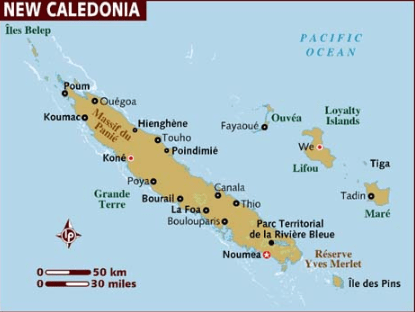
New Caledonia

  • According to a report by CNRS and Science News that was released in 2013 “by the year 2100, global warming will have caused sea levels to rise by 1 to 3 meters”. This will definitely affect all islands, but the article continues to state that “New Caledonia would be the worst affected”. It’s scary to see that the country is home to “two thirds of the islands that would be submerged in the archipelagos”.


What are endangered cultures? Do you agree or have other examples?

Image result for endangered culture new caledonia

Endangered cultures are cultures that are currently being lost. With a world that is constantly globalizing we are seeing larger cultures take over or over shadow smaller ones. This is ultimately getting rid of these smaller cultures and creating a more homogenized world. One great example of this is through Westernization. Westernization makes this very clear with its forever growing brands like McDonalds, Coca-Cola, and like Noor says the movie “Baywatch”.

  1. New Caledonia
    1. Currently Kanak is becoming an endangered culture of New Caledonia’s. The process of this happening and the cultures current status can be found in my previous article. (Nationalism and Inequality)


What are the main points Farish Noor makes when he talks about going beyond eurocentrism? What is eurocentrism?

  1. Eurocentrism- “a worldview centered on the biased towards western civilization. The exact scope of centrism varies from the entire Western world to only Europe or even just Western Europe”
  2. Noor “eurocentrism denotes the emerging perception within the European cultural, historical experience of European identity as good and all other forms as less good or less advanced”
    1. “the cultural perspective from which the West views and judges the rest of the world by its own standards is much like the cultural superiority in vogue during the age of Empire.”
  3. When talking about “going beyond eurocentrism” Farish makes the point that western cultures won’t accept other views because it devalues their own (ex: Fahrenheit/Celsius). He states that “the Western world cannot serve as an example to the rest of the world” and that even though the West has a large amount of power, its power will not last forever. Countries are have pushed back and always will. Even efforts taken by western minorities had a backlash on the global community. This was brought to attention by Noor when he talks about the feminist movement in the 70’s and how it further divided women and men.

Sustainability and Our Future

Image result for sustainability

Overview

In today’s post we will be discussing global sustainability and the actions in which we should be taking to affect this sustainability. Now, we will talk about what these actions look like and who all is working towards them but will still be asking the question, Is this all enough?


Sustainability Action, World Leaders Involvement, and a Consensus? 

People are saying that our planet is in peril and that we need to start taking more action regarding sustainability. Now, with this being one of our moral obligations how do we show others that there is action being made? I say, for starters, they just simply need to appear to be in motion. Not just any motion either they need to be made in an effective and positive direction. A direction that shows progress, a process that has results. Some of these actions can be made on an individual level as in reducing waste, educating yourself, conserving goods/water, and simply choosing to live a more sustainable lifestyle. We as individuals CAN have an impact, even if it’s a small one, it’s still better than nothing.


The big impacts that can be made will be up to world leaders and corporation owners. They all, also, agree that the world needs to be living more sustainably. This is making some countries, like Germany, and some even some states, like Seattle, to create laws around being more sustainable. These places are banning or taxing items or businesses that are hurting our environment. There is no consensus that I could find among our world leaders other than the Sustainable Development Goal 13.


Environmental Issues

Today’s topic has a very large impact on both our countries. Fiji and New Caledonia are both affected by our environmental choices on many different levels. Both countries have suffered from a number of things, but currently they are finding different/new ways to sustain, fix what’s been broken, and to improve what they currently have.

Image result for New caledonia nickel mine

New Caledonia: I couldn’t find New Caledonias involvement with either Water.org or even 350. The country however is suffering from many different threats.

*The following information about New Caledonia was found here.

The main issue that New Caledonia is facing are the threats attacking its biodiversity.

  1. Damage or loss of Dry Forests
    1. The dry forests of New Caledonia are very unique to the world and even more so to the country, but only 2% of the ecoregions dry forest remain. This is due to the larger number of cattle in the area, invasions of non-endemic species, and internationally ignited fires.
  2. Damage to coral reefs
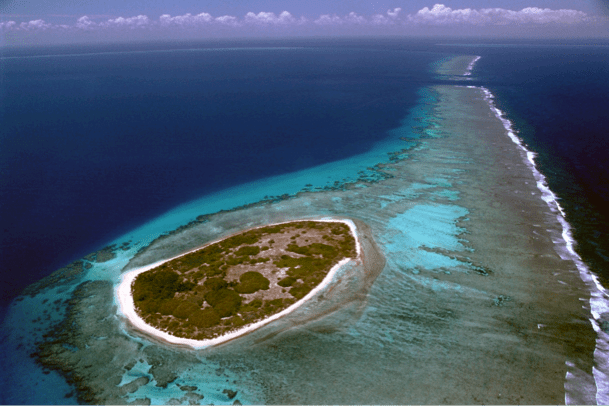
    1. This country is home to the world’s second-largest barrier reef. To protect this reef, they nominated it as a world heritage site, but that’s not exactly helping fight the tourism that’s hurting the reef.
  3. Mining
    1. Mining is not only the most apparent issue to New Caledonia’s biodiversity, but it’s also having the largest affect. We’ve learned that New Caledonia is the world’s fifth largest producer of Nickel with an annual production of 107,000 tons. The gasses that this creates along with the pollutants that it dumps back into the environment have been blamed for acidic water which is leading to unhealthy vegetation and soil. The local government is putting laws in place to reduce this waste and to “curb the negative effects on the environment”.


Image result for New caledonia nickel mine

Fiji: Is involved in 350, but I could not find their involvement with Water.org. Like New Caledonia being an island has led Fiji to suffer from many different environmental issues. These are listed below.

*The following information in regard to Fiji was found here.

Fijis environmental issues don’t seem to be nearly as poor as New Caledonia’s. This is likely due to the fact that New Caledonia is mining for coal, but Fiji is not. Despite this Fiji does have a lot of tourism and does experience a large number of unsustainable fishing methods.

Image result for fiji deforestation


  1. Fijis main issue is with deforestation
    1. We know that “Fijian dry forest is one of the largest dry forests in the South Pacific” but now “only 1% of tropical dry forest remain in Fiji”
    2. Despite this issue Fiji is taking action and is improving with education, local participation, and has focused a lot on local/international protections which were attracted the fact that Fiji contains 3% of the world’s coral reefs.


Environmental Groups

I wanted to focus more on the above topics which left me way over our word limit. So, I will mention organizations that are involved in each country and will leave links to their websites.

Fiji:

New Caledonia:


Image result for conservation international

Post #3: Nationalism and Inequality

Image result for nationalism

Overview

In today’s post we will be discussing the levels of nationalism and inequality that are taking place in New Caledonia. This will be done by providing the definition of nationalism, discussing the New Caledonia’s current nationalist status, and the effects nationalism has had on New Caledonia. Inequality of New Caledonia will then be discussed due to the fact that it is playing a major role in the current events that are taking place within country.


Nationalism Explained- According to the Webster Dictionary nationalism defines as the “Loyalty and devotion to a nation, especially a sense of national consciousness” and the process of “exalting one nation above all other and placing primary emphasis on promotion of its culture and interests as opposed to those of other nations or supranational groups”


Nationalism

Many would see the beginning of the definition and believe that nationalism is, overall, a good thing. They’d say that it’s good to have a sense of devotion to the country that you have been raised in, but once you reach the second part of the definition you soon realize that this isn’t exactly the case. Now, I’m not saying that having some national pride is a bad thing. I’m just saying that the process and extreme forms of nationalism can be dangerous. National Pride can help bring a country together during low times and give individuals purpose during conflict. It can be uplifting, but in extreme cases it can start to have a negative impact on other countries.

According to Zakaria the process of nationalism in western societies, like the United States and those in the United Kingdom, can be harmful for two main reasons. The first is the fact that these powerful countries start to bring it upon themselves to “help” other countries or nation states that haven’t been as prosperous. Now, even if this is in good heart it can “make purposeful national action more difficult” (Zakaria 35) because it starts to have an influence on these other nations governments. This brings us to the second reason on why Zakaria believes nationalism can be dangerous which is due to “The Assertions of Identity” (Zakaria 34) we’ve learned that when these countries get powerful enough that they start to influence and control smaller countries around them.

What makes this week’s topic exciting is the fact that this is something that we’ve actually seen happen to New Caledonia. Now, yes, it’s sad that they have and are still going through this, but with their vote coming up Nov. 4th to split from France does make this topic very relevant. Below is a perfect example of nationalism and is New Caledonia and Frances timeline.


All information regarding New Caledonia’s timeline was found at the Lonely Planet

Timeline

Image result for french 1800s

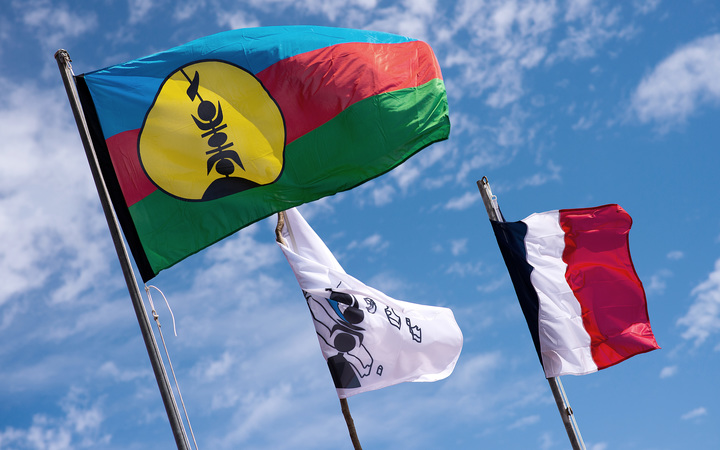
In 1793 the French discovered New Caledonia. Then in 1843 they started sending missionaries to the islands. This led to a French annexation in the 1850s and then a colony in 1864. Now this colony was made up of political deportees, convicts, and communards. In 1878 French settlers encroached on tribal lands which led to a revolt that had 200 French and 1200 Kanak deaths overall halving the Kanak population. In WW1 the French took 2145 men including 1005 Kanaks to fight (600 died 382 being Kanaks) which led to an uprising that killed 11 French citizens. Bringing us to 1923 where the “teaching of French became compulsory and the practices of Kanak medicine men were outlawed”. Finally, around 1946 Kanaks were given French citizenship and the right to vote, but during 1975 “the loyalist” party formed and New Caledonia started fighting for independence. The Independence movement started 1984. An unfair vote was then held taking more land away from the Kanaks starting a revolt that ended up taking 27 hostages (1988). The UN then required France to set up the Matignon accord (1988) which led to The Noumea Accord (1998) granting New Caledonia a “15-20 year period of growth and devolpment” and a “referendum on self-determination to be held by the second half of 2018”

Image result for kanak

So, where did this leave New Caledonia? Are they experiencing any types of Inequality?


Inequality

One of the big reasons New Caledonia is wanting to split from France is due to the inequalities that the islanders are experiencing. (Information below was on the France 24 news network)

  • Cost of everyday good is over 30% higher than France
    • Chocolate bar 8 euros compared to 2 euros in France
    • Yogurt 4.5 euros compared to 1 euro in France
  • Average salary is overall 20% lower in New Caledonia

GINI Index is N/A due to France ownership

Proof of this is here


Post #2

Overview

In today’s post we will be covering different ethnographic qualities and national standings of both Fiji and New Caledonia. We will do this by discussing the countries languages, national memberships, and GDP. Now, despite the fact that New Caledonia and Fiji are so close know that due to New Caledonia’s position with France, which is discussed in blog post one, it and Fiji have very different outcomes in regard to all the topics that we will be discussing today.


GINI Explained– “GINI index measures the extent to which the distribution of income (or, in some cases, consumption expenditure) among individuals or households within an economy deviates from a perfectly equal distribution.” GINI index of 0 represents perfect equality, while an index of 100 implies perfect inequality.


*I was not able to find the countries rank when looking at GDP based on PPP but was able to find the country’s highest and lowest GDPs based on PPPs.


New Caledonia

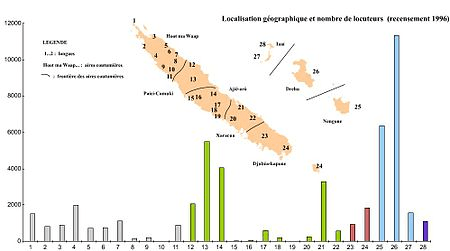
After doing extensive research I came to learn that New Caledonia has a total of 39 individual languages. “Of these, 38 are living and 1 is extinct.” You could look at this and argue that due to the globalized world it’s no surprise that there are so many languages, but what is interesting is the fact that “34 are indigenous and 4 are non-indigenous”. These results lead us to believe that a majority of New Caledonians speak more than one language as 99% speak French, 500+ speak Chinese, 5,000 speak Tahitian, and 2,360 speak Vietnamese. Which likely makes French the states language. When asked the question “Are there indigenous languages and what problems do they pose?” You could easily answer yes and proceed to say that they are making it more difficult for older generations to understand the events occurring around them, but I feel like there is more to it. When it comes to the 34 “living” indigenous languages it’s hard to believe that they would cause much issue. With 99% of the population knowing French most of the country is still able to effectively communicate so what these other languages do is simply add culture and charter to the country of New Caledonia. Where the issue is, is with the 3 developing languages in the country (Chinese, Tahitian, Vietnamese). I say this because as these developing languages grow we are learning that 24 of the indigenous languages are “in trouble” and that 8 are “dying”. So, is it really the indigenous languages of New Caledonia that are causing the “problems”?

fff.png


International Organizations/Roles  

As we know “New Caledonia is a Non-Self- Governing Territory under the administration of France.” The countries decolonization process started taking place in 1998 and its implementation is being monitored by the Committee of Signatories.

The committee consist of 4 members: Cuba, Indonesia, Iraq, and Papua New Guinea and met on March 12-19 of 2018. They had good results with the only issue being that the entire process of decolonizing is still very fragile.

GINI – N/A

GDP PPP

 All time high 2009 (41,942)

Record low 1960 (1734.72)


Fiji

Fijis language situation is much easier than that of New Caledonia due to the fact that “The 1997 Constitution of Fiji establishes English, Fijian, and Hindustani as its official languages.”

Fijian– Used by 450,000 first-language speakers indigenous Fijians and 200,000 second-language speakers

Fiji Hindi (Hindustani)– Spoken by 350,000 in Fiji

Fiji pic.jpg

International Organizations/Roles

Due to Fijis independence the country is much more involved than New Caledonia

WTO- Joined Jan. 14, 1996

GATT- Joined Nov. 16, 1993

IMF– Joined May 28, 1971

UN

“Fiji established its Permanent Mission to the United Nations on 13 October 1970, three days after obtaining its independence from the United Kingdom.”

“Fiji’s participation in the UN has been notably primarily for its active role in UN peacekeeping operations, which began in 1978.”

They were also the first Pacific Island to join the UN

GINI

The below index results show that with time those in the country are experiencing more equality

2002- 38.10

2013- 36.40

GDP based on PPP

All time high 2017 (8703)

Record low 1991 (5678.9)


References

(https://www.indexmundi.com/facts/fiji/indicator/SI.POV.GINI)

(https://tradingeconomics.com/fiji/gdp-per-capita-ppp)

(https://tradingeconomics.com/new-caledonia/gdp-per-capita)

https://www.radionz.co.nz/international/pacific-news/352337/un-team-visits-new-caledonia

https://www.un.org/press/en/2018/gacol3316.doc.htm

http://www.foreignaffairs.gov.fj/news-release/10-foreign-policy/foreign-policy/5-peacekeeping

https://www.ethnologue.com/profile/NC

Current Events Fiji and New Caledonia

Today’s post will cover the current events of Fiji and New Caledonia

New Caledonia

New Caledonia

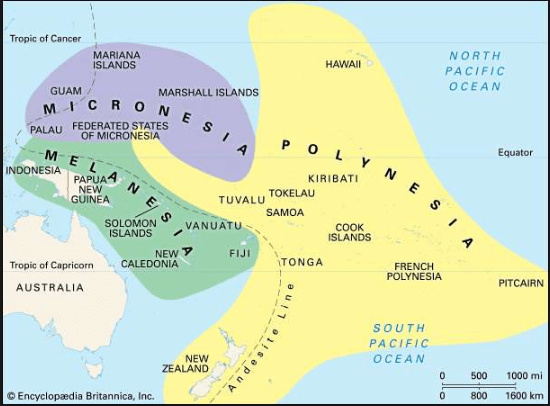
New Caledonia, a country located in the Melanesia region is small, owned by France, but is also very active. As of recently there has been a lot of news that is surrounding the country. This news is not focused on the tourism of New Caledonia but tends to focus more on its politics. Headlines like “New Caledonia: Does the French public actually want to ‘set it free’?” and “New Caledonia: boycotts and blockade” quickly caught my eye.

An article from 08/31/2018 by the Asian Pacific Report states that New Cambodia might be leaving the French. This is no rumor either as a vote for impendence has been set for November 4th. The article states that “while the parties have prioritized holding this vote in a peaceful setting, the process, as assessed by one commentator in Le Monde, is not without pain.”. Now, despite the anxiety that is taking place in New Caledonia the article stresses that this anxiety isn’t mirrored in France. France has other issues that it is currently focused on like the “activities of Trump, climate change, the migration story, etc…” so “as long as it is quiet “down there”, there is not much concern.” The author of the article even started to question Frances concern so took to the streets only to affirm everything they had been seeing.

When taking this concern to the streets the reporter discovered that yes France does not have much concern or question in regard to this vote. When it comes to voters, that are not participating in the territory’s referendum, knowledge of New Caledonia “was rather weak, although there was plenty of soft support for keeping it French.”  Showing that people also don’t really have an idea on what is going on or on what the island does for France. So, would they be better off breaking away from this super power? Will more attention be brought to this event? I guess we will know November 4th.


https://asiapacificreport.nz/2018/08/31/new-caledonia-does-the-french-public-actually-want-to-set-it-free/


Fiji

Fiji.PNG

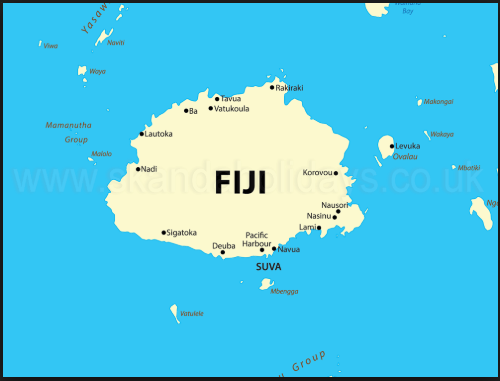
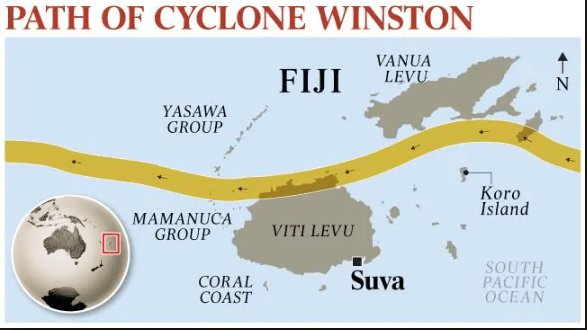
Fiji, another country located in the Melanesia region is known for being a tourist location, but the island itself has many concerns in regard to climate change. An article presented by the Independent covers just this concern. “Fij’s existence threatened by ‘frightening new era’ of deadly climate change” hangs heavily above the article and is quickly followed by “thousands remain in evacuation centres following the latest cyclone to batter the tropical islands”. This article was released April 3rd of this year after the islands avoided a direct hit by Cyclone Josie. Which only made this “fight for survival” all to real and present. In 2016 this anxiety really came to surface when Cyclone Winston “left 44 people dead and 40,000 homes significantly damaged or destroyed after making landfall in Fiji.”

Fiji Huriicane.PNG In the article Mr. Bainimarama (the countries prime minister) said “climate change was causing extreme weather events to become more severe and occur more often.”  “As a nation we are starting to build our resilience in response of the frightening new era that is upon us. It is a fight for our very survival.”

This is where I want to come in with my opinion. For starters the Independent did a great job showing and presenting the anxiety that’s laying over Fiji. It highlighted and stressed key points that those living on the island are seeing/stressing every day. Now, it’s up to us to listen to these anxieties. This issue is very hard for us to relate to due to the fact that it’s not something that we have to worry about, but islands like Fiji that constant change in climate is threatening to the islands very survival.

https://www.independent.co.uk/news/world/australasia/fiji-islands-climate-change-sea-level-rise-global-warming-cyclone-josie-a8286511.html